The Number of the Beast and Other Lucky Numbers: Why Heavy Metal Loves Numerology
Most people spend their lives avoiding unlucky numbers. Hotels skip the 13th floor, airlines drop row 13 and plenty of us won’t book a flight on Friday the 13th.
Heavy metal went the other way. It took the numbers everyone else feared, put them on album covers and screamed them at stadiums full of fans. From 666 to 13, metal has always had a strange love affair with numbers, and the stories behind them are as dark and fun as the music.
666: The Number That Started a Panic
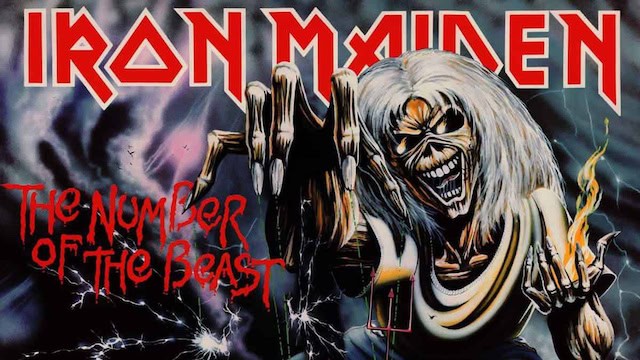
No number is more metal than 666. When Iron Maiden released The Number of the Beast in 1982, the title track’s spoken intro, lifted from the Book of Revelation, was enough to send some religious groups into a frenzy. Records were protested, and the band were accused of Satanism by people who clearly hadn’t listened to the lyrics, which were inspired by a nightmare Steve Harris had after watching Damien: Omen II.
The sessions came with their own legend too. According to band lore, producer Martin Birch was in a car crash while recording the album, and the repair bill came to £666. Whether that’s true or a story that grew in the retelling, it’s exactly the kind of tale metal fans love.
The album went to number one in the UK, and 666 became the genre’s unofficial calling card.
13: Black Sabbath’s Unlucky Bookends
If 666 is metal’s signature number, 13 is its lucky charm. Black Sabbath’s self-titled debut was released on Friday 13 February 1970, which feels too perfect to be an accident. The rain, the tolling bell and that tritone riff gave birth to heavy metal as we know it, on the day superstitious people stay indoors.
Fast forward 43 years and Sabbath returned with 13, their 2013 reunion album with Ozzy Osbourne. It topped the charts in the UK and the US, their first US number one ever. For a band built on dread, giving their comeback the unluckiest number in Western culture was the ultimate full-circle moment.
Fear of the number 13 even has its own name, triskaidekaphobia, and it’s surprisingly common. Horror cinema cashed in on it in 1980 with Friday the 13th, turning an ordinary calendar date into a slasher franchise that’s still running.
Masks, Numbers and Identity: Slipknot 0 to 8
Slipknot took numerology into the band line-up itself. In their early days, each of the nine members was known by a number from 0 to 8, printed on their jumpsuits and used in place of their names. It gave the band a faceless, cult-like feel that matched the masks and the chaos of their live shows.
The numbers became so iconic that fans still argue over who “really” was number 1 or number 6, and why. It’s a reminder that in metal, a number can be an identity, not just a digit.
Seven: The Lucky Number Metal Couldn’t Resist
Not every number in metal is about darkness. Seven, the most widely loved lucky number in the world, turns up again and again. Avenged Sevenfold took their name from the Book of Genesis, and Iron Maiden built a whole concept album, Seventh Son of a Seventh Son, around the folklore that a seventh son of a seventh son is born with special powers.
That folklore runs deep. Seven shows up in the days of the week, the colours of the rainbow and the “seven wonders” lists. It’s also the backbone of modern number games. Draws like Emirates Draw in the GCC even named a game after it, MEGA7, proof that our ancient trust in the number seven hasn’t gone anywhere.
Tool and the Maths of Prog Metal
At the other end of the spectrum is Tool, a band that treats numbers as a puzzle rather than a superstition. Their song “Lateralus” is built around the Fibonacci sequence. The syllables in the vocals follow the pattern 1, 1, 2, 3, 5, 8, 13, and the time signatures shift through 9/8, 8/8 and 7/8, adding up to 987, itself a Fibonacci number.
It’s metal as mathematics. And it shows that the genre’s fascination with numbers isn’t only about shock value. It’s about finding patterns, meaning and a bit of magic in the chaos.
Lemmy and the Ace of Spades
No piece on numbers and luck in metal would be complete without Lemmy. Motörhead’s “Ace of Spades” is basically a song about gambling, packed with card-table slang and the attitude of a man who’d rather take a risk than play it safe. Lemmy was a regular at the fruit machine in the Rainbow Bar & Grill on Sunset Strip, and when he died, fans left playing cards and tributes there.
The famous line about not wanting to live forever sums up metal’s relationship with luck perfectly. You don’t fear the odds. You play them loud.
Why Metal Embraces “Unlucky” Numbers
So why does metal love the numbers everyone else avoids? A few reasons:
- Rebellion. Taking a feared symbol and wearing it proudly is the most metal thing you can do.
- Mystery. Numbers carry centuries of folklore, religion and superstition, which gives songs instant weight.
- Shared language. A fan who sees 666, 13 or a Slipknot number knows exactly what tribe they belong to.
- Fun. For all the darkness, metal has a strong sense of humour, and poking fun at superstition is part of the joke.
The Final Note
Numbers have shaped how humans think about luck for thousands of years, and heavy metal has made them louder than ever. Whether it’s Maiden’s 666, Sabbath’s 13, Slipknot’s 0 to 8 or Tool’s Fibonacci riffs, the genre keeps proving that a number is never just a number.
So next time you see a 13 on the calendar or a 7 on a ticket, crank up something heavy. Luck, good or bad, always sounds better with distortion.