
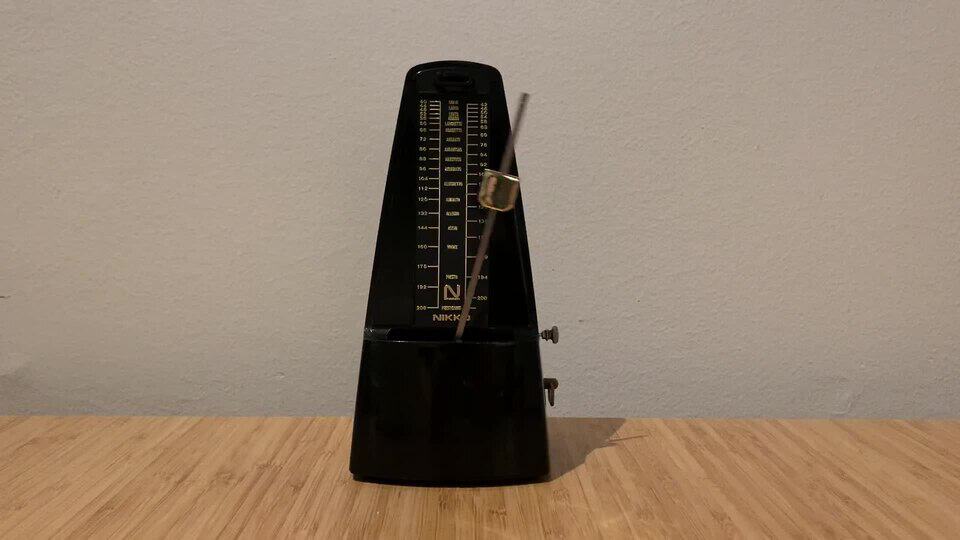
Metronome Online: A Simple Tool for Daily Practice Habits
Being a musician is a dream of many. You may want to learn and become a better musician every day. However, it may be difficult to practice without building a habit first.
It does not matter how long you practice, but how regularly you do it. Learning basic skills every day is a simple routine that will eventually help you reach your music goals.
Practicing rhythm is a good starting point. You can also use a helpful tool, Metronome Online, that gives you a steady beat to follow without any extra equipment. Open it in your browser, choose a tempo, and start practicing.
Start With a Short Routine
You can start by building a short routine that is simple to stick to. If you only have 15 or 20 minutes, you can divide that time into a few simple parts. For example:
- 3 minutes of warm-up;
- 5 minutes of scales or basic technique;
- 5 minutes on a difficult part of a song;
- a few minutes playing the whole piece.
Using a metronome during these exercises gives the session some structure. Instead of playing at a different speed each day, you can return to the same tempo and see whether the exercise feels easier.
This is also a simple way to measure progress.
Choose a Tempo You Can Control
It is tempting to practice everything at full speed, especially when you already know how the song should sound.
But playing too fast often creates mistakes.
That is why it is better to start at a tempo where you can play the exercise comfortably. If a section feels difficult at 120 BPM, try 80 or 90 BPM instead.
Play it several times without stopping. Once the notes feel clean and your timing stays steady, increase the tempo slightly. Small steps usually work better than suddenly jumping from a slow tempo to the final speed.
Use the Same Exercise for Several Days
A good practice habit becomes easier when you do not have to decide what to practice every time you pick up your instrument.
Choose one or two exercises and keep them in your routine for several days. For example, a guitarist might practice the same scale at 80 BPM each day. A pianist might repeat a short chord exercise. A drummer could work on the same basic rhythm.
After a few sessions, you may notice that the exercise feels more natural. You can then increase the tempo or move to something slightly harder.
This gives your practice a clear direction instead of starting from zero every day.
Pay Attention to the Beat
The metronome should not become background noise. You need to listen to the click while you play.
If your notes regularly come before the click, you may be rushing. If they come after it, you may be slowing down.
At first, keeping your attention on both the instrument and the beat can feel difficult. That is part of the exercise.
Try playing something very simple, such as one note on every click. Once that feels comfortable, move to two notes per click or a more complicated rhythm.
The goal is to make steady timing feel natural.
Keep Track of Your Tempo
One simple practice habit is writing down the tempo you reached. You do not need a complicated practice journal. A note on your phone is enough.
For example:
- Scale exercise — comfortable at 90 BPM
- Song intro — working at 105 BPM
The next day, you know exactly where to begin.
This also helps prevent you from increasing the speed too quickly. If 105 BPM was difficult yesterday, there is no reason to start at 125 BPM today.
Instead, work at 105 again and see whether it feels easier.
Do Not Turn Every Session Into a Speed Test
You may associate the metronome with playing faster, but speed is not its only purpose.
Slow practice can be just as useful. Try playing an exercise much slower than usual. The larger space between the clicks forces you to pay more attention to the timing of each note.
You can also use a slow tempo to work on clean technique, dynamics, or difficult transitions. The goal is control, not simply reaching the highest BPM number possible.
Final Thoughts
A good daily music routine needs consistency, and a metronome can help with that. It can help you practice at a controlled speed, notice timing problems, and track small improvements from one day to the next.
Start slowly, keep the routine simple, and repeat it regularly. As your timing improves, the click becomes less something you have to chase and more something your playing naturally follows.