Book Review: King Sorrow by Joe Hill
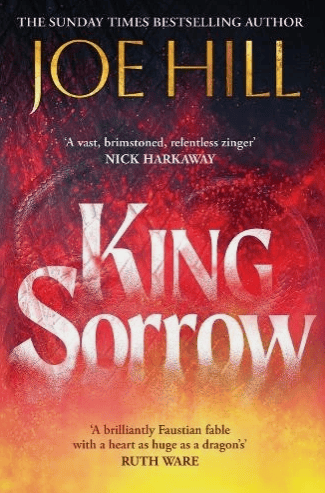
King Sorrow is the latest novel from American author Joe Hill, bringing together elements of horror, dark fantasy and the supernatural.
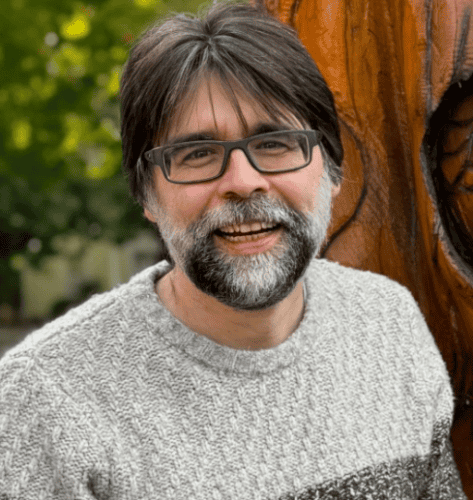
Joe Hill is an American author best known for his work in horror and dark fantasy. The son of legendary horror writer Stephen King and novelist Tabitha King, Joe initially published under his pen name to establish himself on his own merits. His previous novels include Heart-Shaped Box, Horns, NOS4A2 and The Fireman, alongside the comic book series Locke & Key, which he co-created with artist Gabriel Rodríguez. Several of his works have gone on to receive film and television adaptations, including Horns, starring Daniel Radcliffe, and The Black Phone.
Now, with King Sorrow we mark Joe Hill’s return to full-length novels after nearly a decade, following the release of The Fireman in 2016. Though in the intervening years, Hill has continued to write short stories and novellas releasing the collections Strange Weather in 2017 and Full Throttle in 2019. He has also kept himself busy working on comics, alongside various film and television projects.
King Sorrow was published by Headline Publishing Group on 21 October 2025. Coming in at a hefty 896 pages, this is a beast of a book.
There will be spoilers after this line. I’ll try to keep them to a minimum, but you have been warned!
King Sorrow is set initially in the 1980s, introducing us to Arthur Oakes, a college student. Arthur, a thoughtful, likeable but unfortunate soul gets caught up in a blackmail scheme involving local criminals who force him to steal rare books from his college library. One of the books is particularly disturbing: a journal bound in human skin. Arthur turns to his close friends — Colin Wren, twins Van and Donna McBride, Allie Shiner and Gwen Underfoot — for help. Colin, whose family has a history of collecting occult objects, becomes central to their decision to fight back.
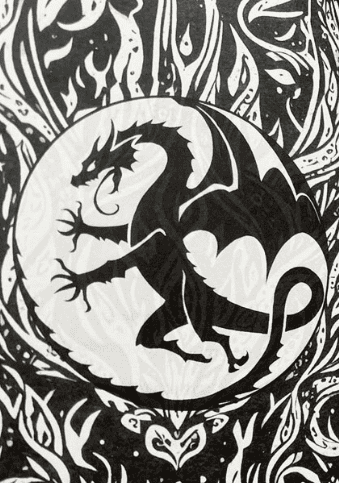
The friends discover that the journal contains the means to summon King Sorrow, an ancient demon/dragon-like entity from a realm known as the Long Dark. They decide to try to summon it and use it against the people threatening them. Their decision comes with a horrifying price though. In return for his help, King Sorrow demands a human sacrifice every Easter. If the group fails to provide one, the consequences will fall on them instead. Their attempt to solve one terrible problem has created something far worse.
Maybe it’s the arrogance of youth, or maybe the privileged backgrounds most of our group seem to come from, or maybe just desperation to help Arthur but the friends convince themselves that they can control King Sorrow. They can do their research, find the worst of the worst of society and set the King on them each Easter, convincing themselves that they are doing the world a service but having the power over life and death sees them operating in a dangerous moral grey area that has consequences. Those consequences are explored as we follow the group through their lives watching the different paths they take, and how King Sorrow and the weight of what they have done and do affects them and their relationships.
This expands way outside of their own group over time as King Sorrow’s power grows, each year, with each kill. Eventually even dragging corporations, military and political bodies into the mix.
As time passes, our group take very different directions. Colin, who appears to modelled on a sort of Elon Musk or Mark Zuckerburg tech billionaire character, has power and seeks more of it. Arthur remains studious, trying to find a way to remove King Sorrow from their lives. Some turn to alcohol to cover their sadness and guilt as they become increasingly troubled by what they’ve done, while others become more comfortable with the power the arrangement gives them. All the while King Sorrow looms over them becoming more and more powerful, and destructive with each passing year.
We follow the group all the way through until 2016, and a little beyond in the epilogue, as they seek to bring an end to their decades of torment. Not everyone will make it. Not everyone made it this far, but they brought this demon to this world and if they don’t find a way to stop it now, it could be too late for all of us.
King Sorrow is a hard one to review because it is such a large and widespread story. I can’t really say I liked it or didn’t like it, because that feeling comes and goes throughout the book. There are huge sections that had me turning the pages, completely invested in what was happening, only for that to be followed by a lengthy section where I found myself waiting to get back to the characters and storylines I was most interested in. By the conclusion, I was satisfied with what I’d read, but I can’t say I loved the entire journey getting there.
At times, King Sorrow feels over-inflated. There are a number of side stories that felt more like distractions than anything essential to the main story, and some of the characters were difficult to like. Donna’s story is one of many complex layers, but I struggled to connect with her as a character. Colin was another who I couldn’t really connect with. A man of privilege even from a young age, he wasn’t someone I found particularly likeable, although I did appreciate the overall arc of his story and where Hill takes him.
Van was a great character, while Arthur and Gwen were also two I enjoyed spending time with. I did, however, question the need for some of Arthur’s backstory. The whole storyline involving his mother being in prison, and the elder Nighswander being in there threatening her for what felt like around 60 pages, seemed unnecessary to me. Arthur himself was a character I liked, but I barely found myself thinking about his mother at all, which made that extended section feel even more disconnected from the story I was actually invested in.
One of my favourite characters was probably Tana Nighswander. Hers is another difficult story, as she goes through hell but manages to come out the other side as a good person. The kindness shown to her by Gwen plays a part in that, but so does her own inner strength, and I found her journey far more engaging than I expected.
The fantastical elements didn’t always work for me either. Trolls and King Arthur’s sword are ideas that pulled me out of the story at times, although I did really enjoy what Hill eventually does with the trolls. The idea of mythical trolls evolving into modern internet trolls, hiding away in Wi-Fi-enabled caves, is genuinely funny. That did leave me wondering where exactly funny sits within supernatural horror, though. There are moments where the humour works really well, while at other times it made the fantastical side of the story feel even more detached from the horror.
Despite all of that, I really do like Joe Hill’s writing style. The character development is one of the book’s strongest aspects, and the fact that I came away with such strong feelings about certain characters, whether I liked them or hated them, says a lot about how well developed they are. Hill gives these characters enough depth that I cared about what happened to them, even when I didn’t particularly like them.
Ultimately, I think King Sorrow could have been trimmed. There are huge parts of the book that are genuine page-turners, but they are followed by equally huge sections where the pace slows and the focus moves away from the characters I was most invested in. It is worth reading, particularly because I liked where it ultimately ends up, but it is not an easy journey to get there.
Joe Hill Links
Amazon Page – Website – Facebook – Instagram
Author

King Sorrow by Joe Hill
-
The Final Score - 7.5/10
7.5/10